
Dental X-Rays in Brentwood, CA
Dental X-rays are an important diagnostic tool used to help dental professionals evaluate areas of the mouth that may not be visible during a routine visual examination.
At Marsh Creek Dental, dental X-rays in Brentwood, CA may be recommended as part of a comprehensive dental examination, when evaluating symptoms, or when planning certain types of dental treatment.
X-rays can provide additional information about teeth, roots, surrounding bone, and other structures inside the mouth. Combined with a clinical examination and your dental history, diagnostic imaging can help your dental team better understand your oral health.
here are two general categories of dental X-rays: intraoral and extraoral X-rays. Intraoral X-rays are taken inside the mouth and provide detailed images of individual teeth, roots, and surrounding bone. Extraoral X-rays are taken outside the mouth and can provide a broader view of the jaw and facial structures.
Intraoral X-rays are commonly used in dentistry and may help your dentist:
- Detect cavities and areas of tooth decay
- Examine tooth roots and surrounding structures
- Evaluate the bone supporting the teeth
- Identify signs associated with gum disease
- Monitor developing teeth and tooth growth
- Support diagnosis and treatment planning

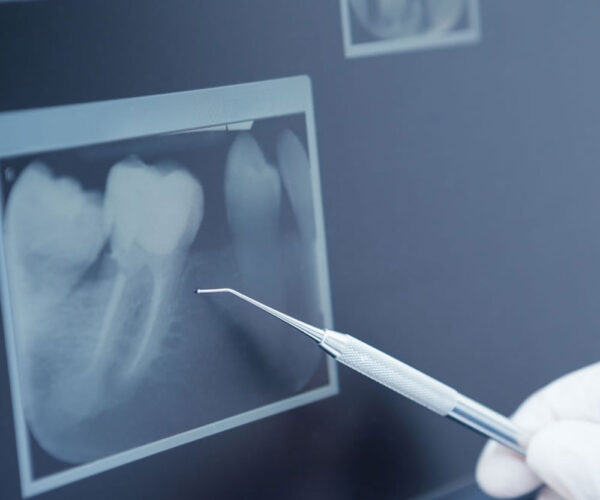
What Are Dental X-Rays?
Dental X-rays are diagnostic images that allow dental professionals to examine structures inside the mouth that cannot always be seen directly.
A visual examination can provide valuable information about the teeth and gums, but some dental problems may develop in areas that are difficult or impossible to see without imaging.
Dental X-rays may help identify or evaluate:
- Tooth decay between teeth
- Problems below the gumline
- Dental infections
- Changes around tooth roots
- Bone-related changes
- Developing teeth
- Impacted teeth
- Certain dental injuries
- Other conditions requiring further evaluation
Not every patient needs the same type or frequency of dental X-rays. Your dental provider can determine whether imaging is appropriate based on your individual circumstances.
Why Are Dental X-Rays Important?
Some dental problems may not cause noticeable symptoms during their early stages.
For example, decay between teeth may not be visible during a normal visual examination. Problems involving the root of a tooth may also require additional diagnostic information.
Dental X-rays can provide information that complements the clinical examination.
They may be useful for:
- Detecting areas of concern
- Evaluating tooth roots
- Assessing supporting bone
- Investigating dental pain
- Planning certain treatments
- Monitoring developing teeth
- Evaluating dental injuries
The goal of dental imaging is to provide your dental team with additional information when it may be clinically useful.
When Might You Need Dental X-Rays?
The need for dental X-rays varies from patient to patient.
Your dental provider may recommend imaging when:
- You have symptoms such as tooth pain
- A tooth is sensitive or damaged
- There is concern about tooth decay
- Gum or bone-related concerns need evaluation
- A tooth has been injured
- A tooth may require root canal treatment
- An extraction is being considered
- Developing teeth need to be evaluated
- Additional information is needed for treatment planning
Dental X-rays may also be used periodically as part of ongoing dental care when appropriate.
The recommended imaging schedule should be based on your dental history, age, symptoms, clinical findings, and individual risk factors.
Dental X-Rays and Routine Dental Examinations
Dental X-rays are often used as part of a broader dental examination rather than as a standalone service.
A comprehensive evaluation may include:
- Review of your dental history
- Examination of your teeth
- Evaluation of your gums
- Assessment of existing dental restorations
- Evaluation of symptoms
- Dental X-rays when appropriate
- Discussion of preventive or restorative treatment
Our general dentistry services include preventive and diagnostic dental care designed to support long-term oral health.
Dental X-Rays for Tooth Decay
Tooth decay does not always appear clearly during a visual examination.
Certain areas, particularly between teeth, can be difficult to evaluate directly. Dental X-rays may provide additional information when your dental provider suspects decay or needs to assess an area more thoroughly.
If decay is identified, treatment may depend on the location and extent of the problem.
Marsh Creek Dental provides dental fillings in Brentwood for patients who require restorative treatment for cavities or certain types of tooth damage.
Early evaluation can help determine whether preventive monitoring or restorative treatment is appropriate.
Dental X-Rays and Root Canal Treatment
Dental X-rays can be an important part of evaluating teeth that may require root canal treatment.
When the inside of a tooth becomes inflamed or infected, symptoms can include:
- Persistent tooth pain
- Sensitivity to hot or cold
- Pain when chewing
- Swelling
- Tenderness around the tooth
- Changes in the appearance of the tooth
Diagnostic imaging may provide additional information about the tooth and surrounding structures.
If root canal treatment is being considered, learn more about our root canal services.
Dental X-Rays and Gum Disease
Dental X-rays may also provide information about the supporting structures around teeth.
A visual examination can evaluate the appearance and condition of the gums, while imaging may provide additional information about the bone surrounding the teeth when clinically appropriate.
If you experience bleeding gums, swelling, gum recession, persistent bad breath, or other symptoms, a professional evaluation may be appropriate.
Marsh Creek Dental provides gum disease treatment in Brentwood for patients who require evaluation and treatment for gum-related concerns.
Dental X-Rays Before Tooth Extraction
Dental imaging may be useful when a tooth requires extraction.
An X-ray can provide information about the tooth and surrounding structures that may help with treatment planning.
Tooth extraction may sometimes be considered when a tooth is severely damaged, cannot be restored appropriately, or presents another dental concern.
Learn more about our dental extraction services.
The appropriate treatment depends on the condition of the tooth and the patient’s individual circumstances.
Dental X-Rays for Dental Emergencies
Dental X-rays may be particularly useful when evaluating certain urgent dental problems.
A dental emergency can involve:
- Severe tooth pain
- A broken or cracked tooth
- Significant swelling
- Dental trauma
- A knocked-out tooth
- Suspected dental infection
- Other sudden dental problems
Imaging may provide additional information when a dental professional needs to evaluate the source or extent of a problem.
If you are experiencing an urgent dental problem, visit our emergency dental services page for more information.
Dental X-Rays for Children
Children may sometimes require dental imaging as their teeth develop.
Dental X-rays can provide information about:
- Developing permanent teeth
- Tooth eruption
- Areas that are difficult to examine visually
- Certain dental problems
- Dental injuries
- Other conditions requiring additional evaluation
Not every child needs X-rays at every dental appointment.
Your child’s dental provider can determine whether imaging is appropriate based on age, dental development, symptoms, history, and clinical findings.
Our pediatric dental services focus on age-appropriate preventive and children’s dental care.
Are Dental X-Rays Safe?
Modern dental X-ray technology is designed to provide diagnostic information while using a relatively small amount of radiation.
Dental professionals consider whether an X-ray is clinically necessary before recommending imaging.
The decision may take into account:
- Your symptoms
- Dental history
- Age
- Previous X-rays
- Clinical findings
- The purpose of the examination
If you have questions or concerns about dental imaging, discuss them with your dental provider before the examination.
Do Dental X-Rays Hurt?
Dental X-rays are generally a non-invasive diagnostic procedure.
Depending on the type of image being taken, the process may involve positioning a sensor or other imaging equipment in or around the mouth.
Some patients may experience temporary discomfort from positioning the equipment, particularly if they have sensitive gums or another oral condition.
Tell your dental team if you experience discomfort so they can help make the process as comfortable as possible.
How Often Do I Need Dental X-Rays?
There is no universal schedule that applies to every patient.
The appropriate frequency depends on factors such as:
- Age
- Oral health
- Dental history
- Symptoms
- Previous dental treatment
- Risk of tooth decay
- Gum health
- Clinical findings
Some patients may require imaging more frequently than others, while routine patients without specific concerns may not need X-rays at every visit.
Your dental provider can recommend an appropriate schedule based on your individual needs.
Dental X-Rays and Preventive Dentistry
Diagnostic imaging is one component of comprehensive preventive dental care.
Preventive dentistry also includes:
- Routine dental cleanings
- Oral hygiene education
- Regular dental examinations
- Gum health monitoring
- Preventive treatments when appropriate
- Healthy home-care habits
Our routine dental cleaning services can help remove plaque and tartar buildup, while regular examinations allow your dental team to monitor changes in your oral health.
You can also learn more about oral hygiene education and how daily habits can support healthier teeth and gums.
Dental X-Rays and Treatment Planning
Dental treatment decisions should be based on appropriate clinical information.
When treatment is being considered, dental X-rays may provide useful information that complements the visual examination.
For example, imaging may be helpful when planning:
- Root canal treatment
- Dental extractions
- Treatment for certain cavities
- Evaluation of dental infections
- Assessment of developing teeth
- Evaluation of dental injuries
X-rays are not intended to replace a clinical examination. They are one diagnostic tool that may be used when appropriate.
What Should I Tell My Dentist Before an X-Ray?
Before dental imaging, tell your dental team about any relevant circumstances or concerns.
You may want to mention:
- Previous dental X-rays
- Current dental symptoms
- Pregnancy or possible pregnancy
- Significant sensitivity or discomfort
- Previous dental treatment
- Any concerns about the imaging procedure
Providing accurate information can help your dental team determine the most appropriate approach.
Most popular and trending Dental X-Ray Questions
There is no single X-ray schedule that applies to every patient. The appropriate frequency depends on factors such as your age, oral health, history of cavities or gum disease, symptoms, and risk of developing dental problems.
Your dentist will recommend X-rays when they are clinically appropriate and when the information can help with diagnosis, prevention, or treatment planning.
Dental X-rays use relatively low radiation doses, but every exposure involves some level of radiation. For this reason, X-rays should be taken when they are clinically necessary rather than according to a fixed number per year.
Modern dental practices use techniques and equipment designed to limit radiation exposure. Your dentist will consider your individual needs and only recommend appropriate imaging when the expected diagnostic benefit outweighs the potential risk.
Dental X-rays can show changes in teeth and bone that may be associated with certain dental infections or other conditions, but they do not directly show all types of inflammation or soft-tissue problems.
Your dentist will consider X-ray findings together with your symptoms, clinical examination, and dental history. Additional evaluation may be needed when an issue cannot be fully assessed with an X-ray alone.